

Our Philosophy
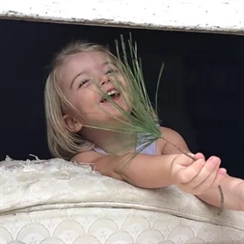
Adults aid children in their understanding of reality, not by imposing unquestioned reality from without, but by supporting the children's attempts at figuring it out for themselves.
The New School has a child-centered philosophy based on the beliefs that every person desires to learn, and that to become a responsible adult, children must have the liberty to practice being responsible.
These are two areas to consider, the school's attitude towards a person and our beliefs concerning learning. School is intended to help children become responsible adults. Children who have the use of language, are complete people. They experience, think, and form opinions. They have beliefs about reality, how it functions, and the relationships between its participants. Their beliefs may be different from an adult's or less sophisticated by adult standards, but they are not blank slates or formless lumps ready to take on the shape determined by an adult. Adults aid children in their understanding of reality, not by imposing unquestioned reality from without, but by supporting the children's attempts at figuring it out for themselves. This stems from a basic respect for the child as a person.
Every person, as an adult, is responsible for himself and his actions in his community. School is intended to help children become responsible adults. We become adept at that which we practice. This is true of intellectual, social, physical, and personal pursuits. If children are to be responsible adults, they must practice responsibility while young. The New School acts on this premise. To this end, the children are responsible for the direction and progress of their own education. No one will reap the fruits of a person's labor or suffer the consequences of his actions as personally as himself.
Although a person is responsible for himself, human beings are social by nature and as a result, we exist within communities. The community is a resource and guide, providing possibilities and assistance. When we practice something new, we rely on coaches or experts in our community to help us progress. The New School believes that a community of responsible adults who are themselves active learners with a wide range of interests are the best examples for and coaches of children. Although a community can provide assistance, it cannot determine the directions a child's inquisitive mind will take. In essence, we do not intend to instruct, but to allow them to learn.
Allowing children to learn often brings to mind a kind of laissez-faire free-for-all in which tyrants of tender years terrorize well meaning but ineffectual adults. On the contrary, because we allow them to make their own decisions and feel the consequences of their actions, we are allowing children to develop as far as they can with as little impediment as possible and with only as much guidance as needed. Thus they learn to appreciate liberty, instead of craving license. They will not become savages because every child, from the time they* are small, longs to join the world around them, to become like the people they see, to become competent adults.
These are two areas to consider, the school's attitude towards a person and our beliefs concerning learning. School is intended to help children become responsible adults. Children who have the use of language, are complete people. They experience, think, and form opinions. They have beliefs about reality, how it functions, and the relationships between its participants. Their beliefs may be different from an adult's or less sophisticated by adult standards, but they are not blank slates or formless lumps ready to take on the shape determined by an adult. Adults aid children in their understanding of reality, not by imposing unquestioned reality from without, but by supporting the children's attempts at figuring it out for themselves. This stems from a basic respect for the child as a person.
Every person, as an adult, is responsible for himself and his actions in his community. School is intended to help children become responsible adults. We become adept at that which we practice. This is true of intellectual, social, physical, and personal pursuits. If children are to be responsible adults, they must practice responsibility while young. The New School acts on this premise. To this end, the children are responsible for the direction and progress of their own education. No one will reap the fruits of a person's labor or suffer the consequences of his actions as personally as himself.
Although a person is responsible for himself, human beings are social by nature and as a result, we exist within communities. The community is a resource and guide, providing possibilities and assistance. When we practice something new, we rely on coaches or experts in our community to help us progress. The New School believes that a community of responsible adults who are themselves active learners with a wide range of interests are the best examples for and coaches of children. Although a community can provide assistance, it cannot determine the directions a child's inquisitive mind will take. In essence, we do not intend to instruct, but to allow them to learn.
Allowing children to learn often brings to mind a kind of laissez-faire free-for-all in which tyrants of tender years terrorize well meaning but ineffectual adults. On the contrary, because we allow them to make their own decisions and feel the consequences of their actions, we are allowing children to develop as far as they can with as little impediment as possible and with only as much guidance as needed. Thus they learn to appreciate liberty, instead of craving license. They will not become savages because every child, from the time they* are small, longs to join the world around them, to become like the people they see, to become competent adults.